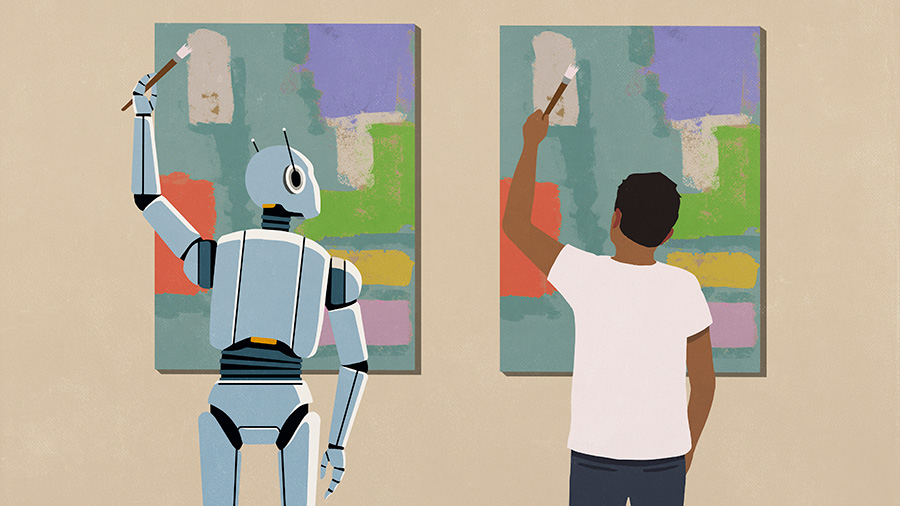
Somewhere in the last few years, the ground shifted beneath marketing and most of us haven’t said it out loud yet. For a century, brands won by telling a better story: louder, smoother, more beautifully produced. That century is ending. The one taking its place belongs to brands that don’t just declare what they stand for, but demonstrate it and let evidence do the persuading. We are entering the age of proof, and it will reward a completely different kind of company and a completely different kind of marketing, one that can prove a promise is keepable before it is ever made.
Trust Became the Product
Start with what’s changed in the people we’re trying to reach. Edelman’s Trust Barometer, built on nearly 34,000 voices worldwide, now ranks trust alongside price and quality as a core reason people choose what they buy. That is a quiet revolution. Trust used to be the halo, the soft feeling around a hard decision. Now it is the decision. And it is growing scarcer by the year, contracting inward toward the familiar and the already-believed. In a world like that, an unproven claim is no longer harmless marketing. It widens the gap between what you say and what people believe.
Proof Is a Language, Not a Tactic
Here is the reframe I want every marketer to sit with: for decades, brand language was the work…the promise, the positioning, the line that made you feel something. That language hasn’t lost its power, but it has lost its monopoly. Audiences have heard the promise. What they want now is to watch it kept. Proof is becoming the new fluency and it is not the cold, rational opposite of brand. Kantar’s brand valuation work shows that meaningful difference, not volume or familiarity, drives the lion’s share of a brand’s pricing and demand power. And “meaningful” means two things at once: a brand that meets a real need and forms an emotional bond. The proof that moves people is proof they can feel…a promise demonstrated, not a spec sheet recited.
Proof Before the Spend
If proof is the new language, someone has to be able to speak it before the money is committed and not just translate it after the fact. That conviction sits at the center of how we work, and it is why we built W.O.P.R., our What-If Prediction & Response engine. It takes a brand’s promise and pressure-tests it against reality, simulating how a campaign will perform across channels and weighing audience signals, competitive moves, and historical results to forecast outcomes (return, cost-per-action, conversion) each carrying its own confidence score. The point is not the dashboard; it is the discipline. W.O.P.R. forces a promise to earn its place before launch, so we enter the market already knowing what the proof should look like and accountable to it when the results arrive. Prediction and proof become two ends of one loop: model the promise, keep it, measure the gap, tighten the model.
The Buyers Are Already Asking
This isn’t a hunch about the future. The market is already voting for exactly this discipline. McKinsey found that roughly 80% of B2B buyers say a performance guarantee, a commitment backed by a refund if the product fails to deliver, is critical to their loyalty. That is buyers, in plain language, asking to be shown the promise has teeth. McKinsey’s 2026 marketing agenda puts the same idea first, distilling the entire mandate into three words: be trusted, be effective, be bold. Analysis of the IPA’s effectiveness databank found that 93% of campaigns posting very large gains in brand trust also delivered a major business effect such as sales, share, or profit. Trust is not a vanity metric sitting upstream of the real work. It is the work.
What a Kept Promise Looks Like
We’ve watched this play out. We helped build a brand platform for a major healthcare company on a single, almost old-fashioned idea: a promise, and the discipline to prove it kept. The campaign led with outcomes instead of adjectives. Top-of-mind awareness rose 94%. Leads held steady on less media spend, because a brand people believe doesn’t have to buy its way back into the conversation every quarter. One proven idea did what a hundred claims never could: it became the operating system the whole company ran on. W.O.P.R. had told us the idea could carry that weight; the market proved it right.
The Age of Proof
This is the future I’d bet on. Proof is not the death of creativity or the end of brand. It is brand language finally growing up. The most visionary thing a company can do in a skeptical market is not to promise harder. It is to show its work, let the result speak, and make that result something people feel. We are surrounded by brands fluent in claims. Almost none are fluent in proof. The ones that learn it first won’t just be believed, they’ll be chosen, and they’ll spend less to get there.
Because in the end, impressions don’t earn trust. Kept promises do.