



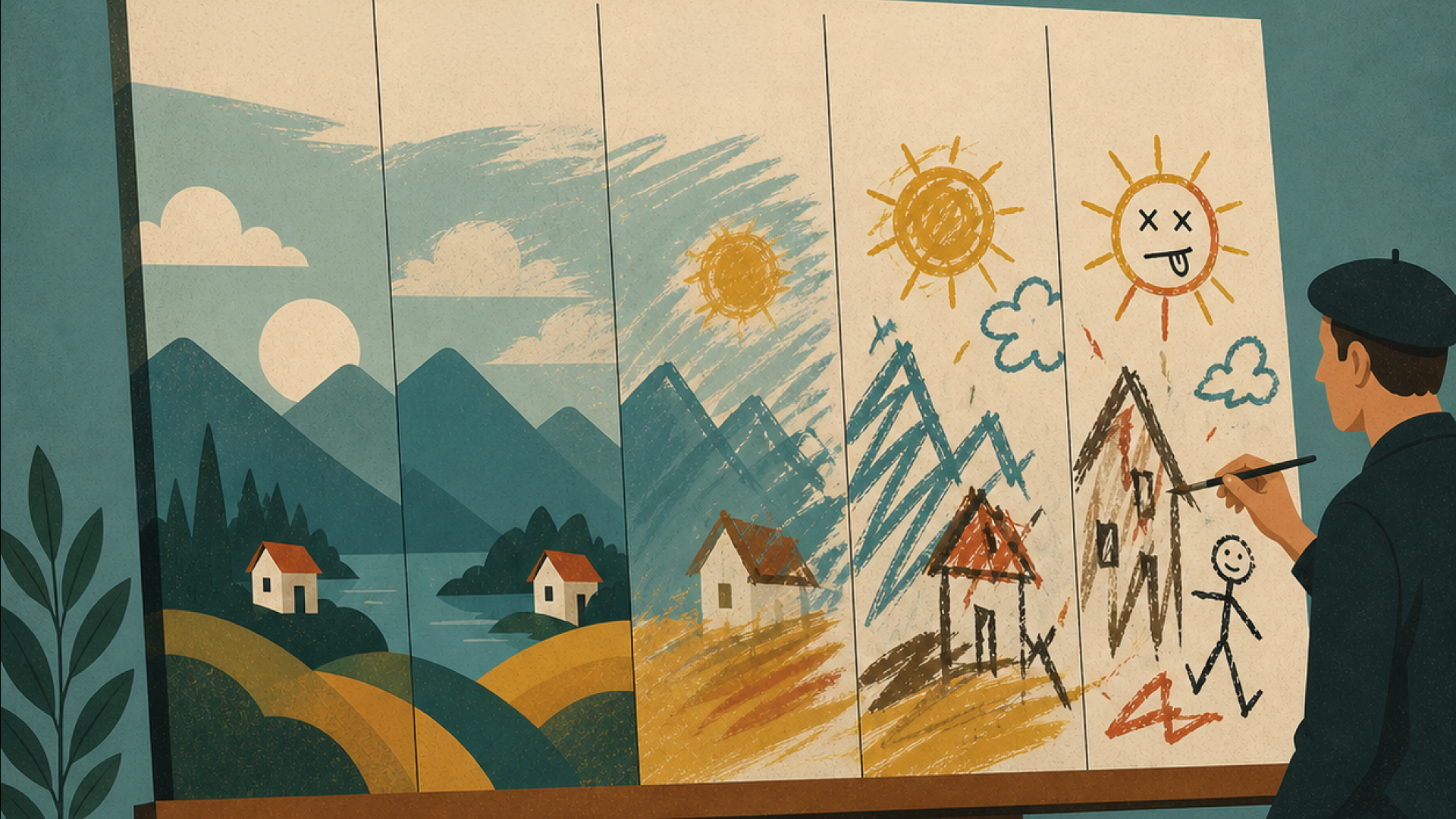
- Most campaign underperformance happens because of predictable breakdowns in execution, alignment and ownership that gradually dilute strong creative.
- The quality of the work is most often compromised after approval, when strategy isn’t fully carried through execution and incremental decisions soften the original intent.
- Campaigns can maintain their edge with integrated systems and early pressure testing.
Campaigns don’t usually outright fail. More often, they may arrive in market slightly less impactful than when compared to the initial presentation that knocked everyone’s socks off. Still good, just not quite what they were meant to be. That gap between strong intent and softened output is where most marketing work quietly loses its integrity.
When great work gets compromised
You had the strategy. The creative was strong. The campaign should have stood out. But by the time it reached the market, it felt… fine.
If you’ve spent any time leading marketing campaigns, that scenario may resonate. You briefed the team, aligned stakeholders, pushed for something that would genuinely differentiate. The work felt right. And yet, somewhere between approval and execution, that edge softened.
Not because the idea wasn’t good enough, but because what happens after is where it starts to lose its shape.
Where potential gets lost
Most campaigns don’t fall apart in dramatic ways. They just slowly become less distinctive. The same pressure points appear across projects, and once you know where to look, the pattern becomes clear.
The strategy-execution gap
Teams tend to overinvest in the “what” and underinvest in the “how.” Execution planning can be rushed or taken for granted, which creates a gap between idea and delivery where craft starts to slip.
Too many hands, not enough ownership
As campaigns move across teams, clarity gets diluted and intent becomes harder to maintain. More voices enter the process, but decision-making doesn’t become tighter, leading to incremental changes that soften the work.
Short-term thinking kills long-term impact
Pressure for immediate results pushes teams to optimize for speed and short-term metrics. Over time, creative becomes more conservative and distinctiveness is traded for what feels safe or proven. But research shows that short-term campaigns can be up to 50% less effective than those built for sustained impact.
Breakdown across channels and experience
As campaigns scale across channels, consistency may break down. Messaging shifts, experiences fragment and the connection between touchpoints weakens. Without a cohesive structure, even well-built campaigns start to feel disconnected.
How to keep great work from getting diluted
If campaigns lose their spark in predictable ways, they can also be built to hold onto it. By making sure the qualities that made the work strong in the first place aren’t compromised, campaigns can move confidently into the real world.
Build execution into the idea from day one
Execution shouldn’t be a downstream consideration. It should define how the work will live across channels, formats and timelines from the start, including where it’s most likely to lose clarity. If an idea can’t scale or adapt without losing its meaning, it isn’t ready yet.
Design for clarity and ownership
Strong work requires clear ownership to stay intact. When accountability is defined early and decision-making is streamlined, there’s less room for the kind of incremental changes that dilute the idea.
Create systems, not one-off campaigns
Campaigns become more resilient when they’re built on repeatable frameworks rather than reinvented each time. Establish consistency across messaging, asset development and channel orchestration so execution doesn’t rely on improvisation.
Stress-test creative in real-world conditions
The question isn’t just whether an idea “works,” but whether it holds up across channels, at scale, and with different audiences. Pressure-testing early exposes where the work might start to lose impact.
Align teams around the same outcomes
Resilient campaigns require alignment across strategy, creative, media and analytics. When teams are working toward shared outcomes, the work stays more cohesive from end to end.
An example of these principles in practice is our work with Thermo Fisher Scientific on their Dangerous Foods campaign. The goal was to reframe allergy diagnostics as a frontline patient safety imperative, using striking food-as-predator visual metaphors to make invisible allergic threats feel immediate, visceral and impossible to ignore.
Built as a connected system from the outset, the concept was designed to scale across channels and formats without losing its impact or clarity. And because strategy, creative and activation were aligned early, the campaign held together as it moved from concept to market, turning a complex clinical challenge into a bold, scalable narrative.
Protecting what makes the work “work”
Efficacy doesn’t happen by accident. It’s the result of deliberate choices about where to invest, how to align and what to prioritize across Resilience doesn’t happen by instinct alone. It requires pressure-testing ideas before they’re locked in, understanding where they might break, and making smarter decisions earlier in the process before time and budget are committed.
That’s exactly what led to the development of our latest platform: the What-If Prediction & Response (W.O.P.R.) engine. Designed to bring greater clarity to the decisions that shape campaign performance, W.O.P.R. helps teams model scenarios and understand potential impact before investment.
If you’re interested in learning more, schedule a demo to see how the W.O.P.R. brings greater clarity and confidence to every campaign move.