



- AI dominated the ad landscape this year, but only a few brands made it feel human
- 2026 was the year of music – from Backstreet Boys to mayo-fueled parodies, lyrical rewrites stole the show
- B2B made its presence felt, but clarity lagged behind cleverness. A few standouts emerged, but we’re still writing the playbook for impact
If there was a theme to this year’s Super Bowl ad lineup, it was excess – not just in spend, but in stimuli. AI continued its full-scale invasion of creative, much like crypto did a few years back, and .coms two decades before that. From Google to Claude, ChatGPT to Waymo, AI was everywhere. But so were Backstreet Boys. And ballading bidets.
Let’s start with the big narrative driver: AI
Let’s talk about the AI ads. According to iSpot, 23% of Super Bowl commercials – 15 out of the 66 ads – featured AI. The best of them was easily Anthropic’s campaign for Claude, which hit the top ten for bothAdweek and Ad Age. And rightfully so. It was clever, self-aware and charmingly executed – a perfect parody of what a generative AI thinks advertising should be. It stood out because it didn’t just mention AI; it demonstrated how absurdly wrong and right it can be, sometimes in the same breath. And it gave me genuine creator envy.
That was the best…and then, sadly, there was the rest. As USA Today Ad Meter panelist analysis noted, the AI-focused ads “didn’t fly with savvy viewers” who found many of the AI references either confusing, soulless or unrelatable. Critics felt similarly, with Ad Age noting that ChatGPT’s own effort lacked clarity or joy – and that “the company should have delivered something more creatively daring.” One could say the same for most others as well.
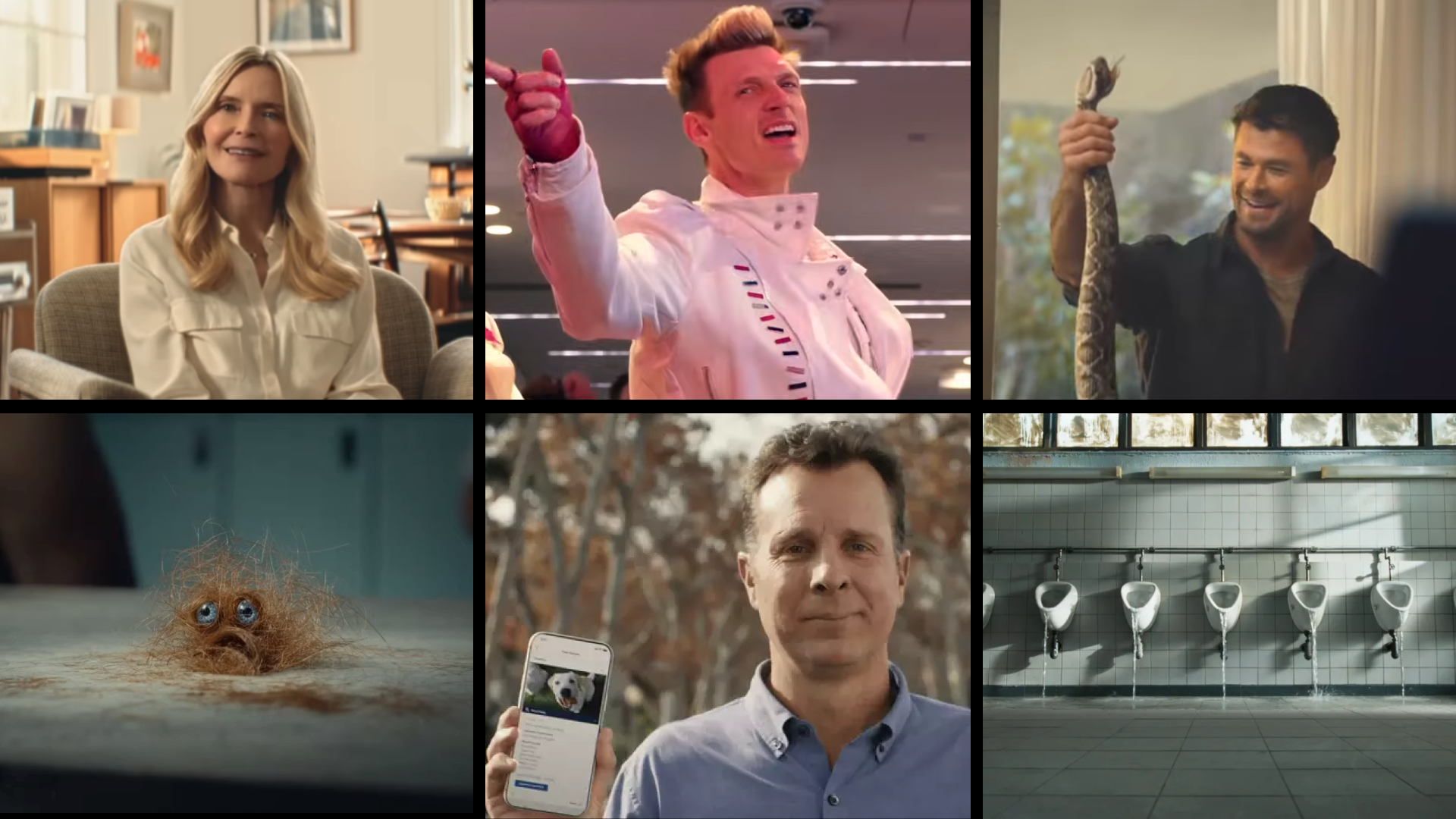
The AI ads that did win with viewers were delivered by Amazon – its Ring spot about finding lost dogs and Alexa spot featuring the Hemsworths both hit the Ad Meter Top 10.
My take: For all the noise around AI, few advertisers found a way to make it feel human. The brands that did, scored big.
Backstreet’s back (all right?)
If it felt like every other spot was a parody of a pop song, it’s because they were. “Sweet Caroline” got bent into a spot for mayo on sandwiches. Liquid I.V. gave us singing toilets (which we can’t help but appreciate given our Roto-Rooter campaign) and Manscaped unchained a hairball serenade. And the Backstreet Boys gave us an both an on-screen performance for T-Mobile and provided the soundtrack for Coinbase’s karaoke spot aimed at saying crypto is for everyone.
And maybe it’s no surprise that music ruled the night. Familiar melodies and playful lyrics are the fastest way to capture attention, invite participation and signal that a brand isn’t taking itself too seriously. And when it’s done right, like Manscaped’s follicular falsettos, it leaves you smiling.
Heartfelt was here, but hardly heard
You could count the number of emotionally driven ads this year on one hand – and even then, none of them truly broke through. Google’s spot ended up more subdued than stirring. Dove, usually a staple for emotional resonance, felt like a softer echo of its former self. The public didn’t connect, and neither did the pundits. And while brands like Google earned praise for craft, that’s not the same thing as connection.
But maybe this wasn’t the year for deep feelings. Between the polarized headlines, a tense election cycle and the constant pressure of global uncertainty, advertisers might’ve sensed that people didn’t want to feel more – they wanted to feel less.
This year’s ads leaned hard into escape: big laughs, big beats and big names. And honestly? That feels like a fair read of the room, especially given the manufactured drama of dueling halftime shows.
B2B showed up with mixed results
This year’s Super Bowl may not have been the moment B2B advertising fully arrived on the world’s biggest stage, but it was a year where we definitely showed up.
The good news? Most of the B2B spots clearly got the brief. They understood they needed to deliver entertainment, not explanation. As noted earlier, Claude’s parody of ChatGPT felt pitch-perfect: clever, restrained and subversively self-aware in a sea of AI hype. Salesforce’s MrBeast stunt wasn’t my favorite in execution, but I’ll give them credit for swinging big with something experiential and audience-participatory. It read as a platform play as much as it did a brand one.
But beyond that? A lot of “blink and you miss it” moments. The tone was often right, but clarity suffered. It was as if B2B finally got the courage to crash the party, but forgot to wear the right shoes. In a world where attention is everything, we have to work harder not just to be clever, but to be memorable and motivating.
Like the Seahawks, the ads didn’t need to be flashy to win
And then there’s AI.com.
If you told me that a generic name and a vague call to “claim your handle” would be one of the most successful traffic drivers of the night, I’d have raised an eyebrow. But the thing worked – too well, in fact, crashing their site during the fourth quarter due to overwhelming traffic.
Was it a great ad? Not really. But it did exactly what it needed to do. Proof that a well-placed URL and just the right mystery still has power in the hands of a mass audience. B2B brands, take note: sometimes the win isn’t in the wow – it’s in the what-next.